
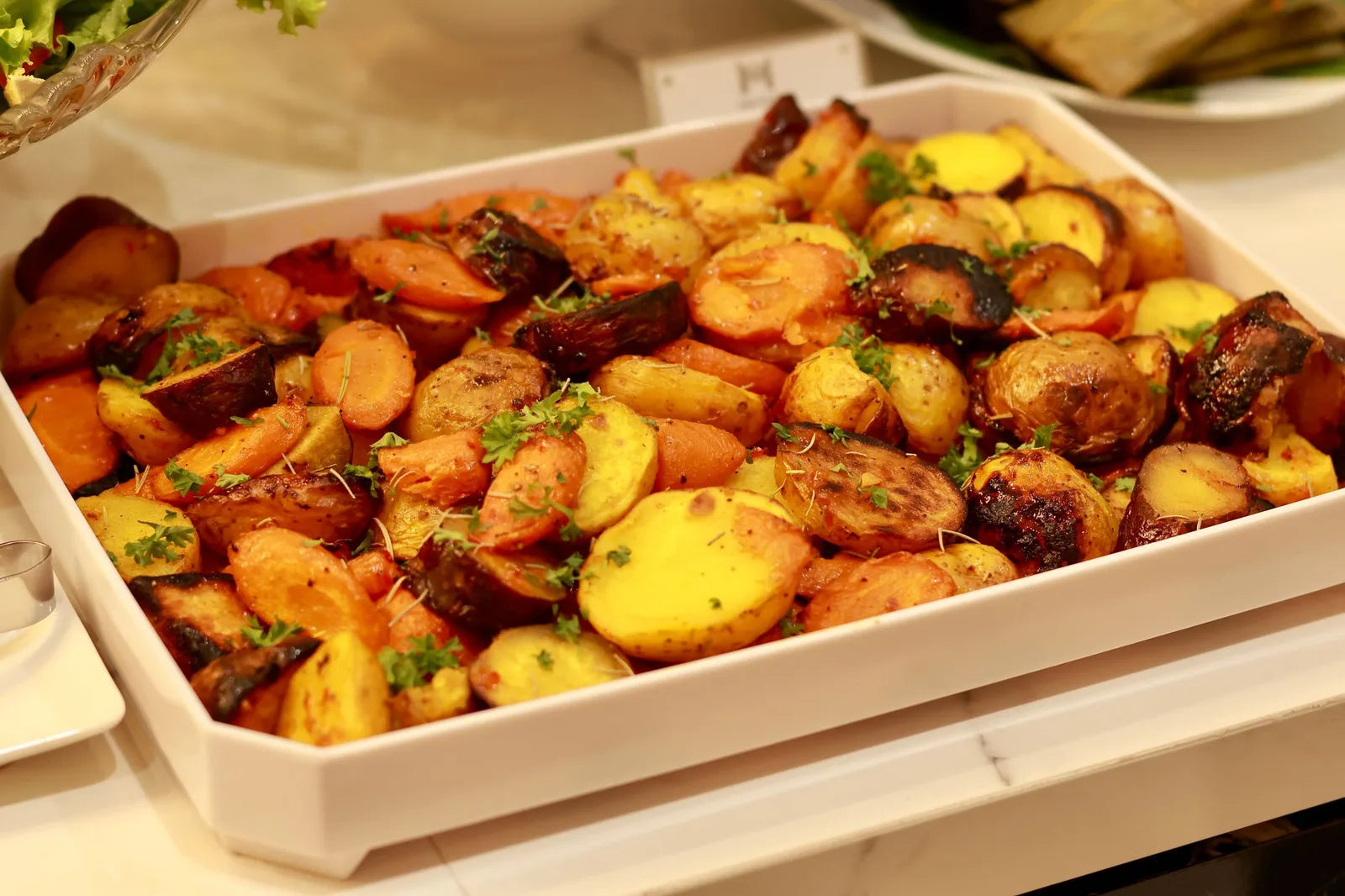

How to Make AIP Vegetables Taste Better, Not Bland
To make AIP vegetables taste better, cook them hot enough to brown (roasting beats boiling), then hit them with the three levers most bland vegetables are missing: fat, salt, and acid. Layer a nightshade-free, seed-spice-free seasoning on top, and match it to the vegetable. A go-to blend and pairings are below.
The fastest way to make AIP vegetables taste better is to stop boiling them and start roasting them, then finish with fat, salt, and acid. Most bland AIP vegetables are not a seasoning failure. They are under-cooked and under-seasoned, and both are easy to fix without a single nightshade.
This guide walks through the cooking method that does the heavy lifting, the three levers that rescue almost any vegetable, how to layer seasoning, a go-to nightshade-free blend, and what to pair with which vegetable. For the wider approach to flavor, the AIP seasoning guide covers the same build-in-layers idea across the kitchen.

Why AIP vegetables taste bland
Two things usually go wrong, and they stack.
First, the cooking method. Steamed or boiled vegetables come out soft and watery, with none of the browning that makes food taste rich. Water tops out around 212°F, which is far too low to develop deep flavor. That is why the same broccoli tastes flat steamed and great roasted.
Second, the seasoning. On the autoimmune protocol, the spices that usually carry vegetables come out. Chili powder and paprika are nightshades, and cumin is a seed spice, so the blends and finishing touches most recipes lean on are off the table. The nightshade-free seasoning and seed-spice-free cooking guides cover those exclusions in full; the short version is that you rebuild the flavor with herbs, alliums, and warm aromatics instead.
Three habits cause most of the blandness, and all three are ordinary cooking fixes:
- Crowding the pan, so vegetables steam in their own moisture instead of browning.
- Skipping fat and acid, which leaves even well-seasoned vegetables tasting flat.
- Under-salting, then trying to cover it with more dried herbs, which does not work.
The autoimmune protocol is a structured elimination diet people use while managing autoimmune conditions, so the constraint is real. But bland is not part of the protocol. The goal is not to survive the meal. The goal is to want the next bite.

Start with the right cooking method
Before you reach for a single spice, change how you cook the vegetable. Method is the biggest lever you have.
Roast for the biggest gain
Roasting is the highest-impact change for most vegetables. High, dry heat browns the surface and concentrates the natural sweetness, which is the flavor steaming washes away.
- Heat the oven to 425°F, hot enough to brown without burning most vegetables.
- Cut pieces evenly so they cook at the same rate.
- Spread them in a single layer with space between pieces. A crowded pan steams instead of roasts, which is the most common mistake.
- Roast until the edges are deeply golden, not just barely soft. That color is the flavor.
A few details make roasting reliable. Pat watery vegetables dry before they go in, since surface moisture steams the pan. Preheat the sheet pan for five minutes if you want extra-crisp edges. And give them time: most vegetables need 20 to 35 minutes at 425°F, with roots and squash running longer and quick vegetables like asparagus done in well under 20. Check at the low end and pull them when the edges have browned.
Get the prep right
A little prep makes the method work. Cut pieces to a similar size so they finish together, and do not cut them too small, or they dry out before they brown. Dry the vegetables well, because a damp surface cannot brown. Use a rimmed sheet pan large enough that nothing overlaps, and split between two pans rather than piling one high.
Char, sear, and saute
When you do not want to turn on the oven, a hot skillet does the same job faster. Get the pan hot, use enough fat, and leave the vegetables alone long enough to brown on one side before stirring. A little char on green beans, cabbage, or Brussels sprouts adds a smoky depth that nightshade-free cooking otherwise has to work for. An air fryer is just a small convection oven, and it browns a single portion quickly with very little oil, which makes it a useful weeknight shortcut.
Boiling and steaming have their place for texture, but if a vegetable has been tasting sad, the method is usually the first thing to change.

Use fat, salt, and acid
Once the vegetable is cooked well, three levers fix almost everything. Bland vegetables are usually missing at least one.
Fat
Fat carries flavor and helps vegetables brown. Toss them with oil before roasting, and add a little richness after cooking too. Many AIP cooks avoid seed oils, so reach for olive oil, avocado oil, or melted coconut oil. A spoonful of coconut cream stirred into mashed or pureed vegetables does the same trick. Aim for about one to two tablespoons of oil per sheet pan, enough to coat lightly without pooling, and toss until every piece looks glossy.
Salt
Salt is the difference between flat and finished. Salt vegetables before roasting so it works into the surface, then taste and add a little more at the end. Salt before cooking seasons the inside of each piece, while a flaky finishing salt adds little bursts on top, so it is worth using both. Most home-cooked vegetables are simply under-salted; a pinch of flaky salt at the table is often all a dish needs.
Acid
Acid is the lever people forget. A squeeze of lemon or lime, or a splash of apple cider vinegar, wakes up a whole pan of roasted vegetables and balances their sweetness. Add it after cooking, not before, so it stays bright. Different acids steer the dish: lemon is clean and bright, lime leans Mexican-inspired, and apple cider vinegar adds a savory tang that suits cabbage and roots.
Here is how they work together. Plain roasted carrots are fine. The same carrots tossed in oil and salt, roasted hard until the edges caramelize, then finished with lemon taste like a different vegetable, and you have not added a single spice yet. Fat, salt, and acid are not seasonings exactly. They are the base every seasoning sits on, which is why a perfectly spiced vegetable can still taste dull without them.
Build flavor in layers
With the method and the three levers handled, seasoning is the finishing layer, and it works best in a deliberate order.
- Foundation: garlic and onion, fresh or powdered, give a savory base that reads as "cooked," not "raw."
- Lift: dried or fresh herbs (oregano, thyme, rosemary, dill, parsley) keep the dish bright and green-tasting.
- Finish: a warm note from turmeric, a little ginger, or a pinch of cinnamon on sweeter vegetables rounds everything out and adds the color paprika used to.
That order, foundation then lift then finish, is the same structure behind every good blend. When a vegetable tastes "missing something," it is usually missing one of those three roles, not more salt. For swaps when a recipe calls for a spice you cannot use, the AIP spice substitution chart is a quick reference.
For a concrete version: roast cauliflower with oil and salt, then toss it warm with extra roasted garlic for the foundation, a handful of chopped parsley for lift, and a little turmeric and lemon zest for the finish. Each layer is doing one job, and together they turn a plain tray into a side you look forward to.

A go-to AIP vegetable seasoning blend
Rather than build the layers from scratch every time, keep one jar of an all-purpose roasting blend on hand. This one is nightshade-free and seed-spice-free, and it makes about 6 tablespoons in five minutes.
Ingredients
- 2 tablespoons garlic powder
- 1 tablespoon onion powder
- 1 tablespoon dried oregano
- 2 teaspoons dried thyme
- 2 teaspoons fine sea salt
- 1 teaspoon ground turmeric
- 1 teaspoon dried rosemary, crushed
- 1/2 teaspoon ground ginger
How to mix and use it
- Measure every ingredient into a small bowl.
- Whisk for about 30 seconds, until the color is even.
- Transfer to a small airtight jar and label it with the date.
To use, toss about one tablespoon with one to two tablespoons of oil per sheet pan of vegetables, spread them out, and roast at 425°F until deeply golden. Finish with a squeeze of lemon. The jar keeps its punch for three to four months stored away from heat and light.
To steer it, add a pinch of cinnamon for sweeter roots, or extra rosemary and thyme for a more savory, herbal direction. The base stays the same; only the finishing note changes, which is how one jar covers most of what you roast.
Match the seasoning to the vegetable
The blend above works on almost everything, but a few small adjustments make each vegetable shine. Think of these as nudges, not new recipes: the method and the three levers stay the same, and only the finishing accent shifts to suit the vegetable in front of you.
- Root vegetables (carrots, beets, parsnips, sweet potato): they are sweet, so lean into warmth. The blend plus an extra pinch of cinnamon and a finish of lemon is excellent.
- Cruciferous (broccoli, cauliflower, Brussels sprouts, cabbage): they love char and garlic. Roast hard, then finish with extra garlic and a generous squeeze of acid to cut the sulfur edge.
- Squash (butternut, acorn, delicata): sweet and soft, so they take warm spices and a little coconut fat well; turmeric and ginger suit them.
- Greens (kale, collards, chard): quick-cook them in fat with garlic, then finish with acid; they need salt and brightness more than warm spice.
- Alliums and mushrooms: these are flavor builders themselves. Roast or sear them alongside other vegetables to deepen the whole pan.
- Zucchini and summer squash: watery, so they need a hot pan and no crowding; salt them after cooking, not before, to avoid drawing out water.
Rough roasting times at 425°F help you plan a mixed pan: roots and winter squash take 30 to 40 minutes, cruciferous 20 to 30, and green beans, asparagus, and zucchini 12 to 18. Cut everything to a similar size, or start the slow vegetables first and add the quick ones partway through.
Nightshade vegetables (potato, tomato, eggplant, and peppers) are the ones left out on AIP elimination, so this list leans on roots, cruciferous, squash, and greens instead. None of them need a nightshade to taste good.
Quick wins and a ready-made option
If you only change three things, make them these: roast instead of boil, salt properly, and finish with acid. That alone turns most bland vegetables around, before you even open a spice jar.
A few more fast wins: roast a big tray at the start of the week and reheat through the days, crisp leftovers in a hot pan rather than the microwave, and keep lemons and a good salt within reach of the stove. If you batch-roast on the weekend, pull the vegetables a few minutes early so they reheat without turning to mush, and refresh them in a hot oven or skillet rather than the microwave.
One more lever is texture. A finishing crunch, such as toasted unsweetened coconut, chopped fresh herbs, or a few crushed plantain chips, gives a soft roasted vegetable some contrast, and contrast is what reads as "interesting" on the plate. Fresh herbs scattered on at the end also taste brighter than dried ones cooked in, so keep a little parsley or cilantro nearby. The same blend and method work on protein too, so a tray of vegetables and a pan of seasoned AIP chicken make a fast, complete dinner.
When mixing a jar feels like one task too many, a clear-label all-purpose blend does the same work. The Savory Sunshine everyday AIP blend is nightshade-free and seed-spice-free, with the foundation, lift, and finish already balanced for roasting and finishing vegetables. It is an optional helper, not a requirement, and if your protocol skips salt, garlic, or onion, the homemade version lets you control every ingredient. Store blends often hide nightshades under a generic "spices" line, which the FDA labeling rules allow, so read the label either way and check it against your own protocol.
Frequently asked questions
What can I put on AIP vegetables to make them taste better?
Start with fat, salt, and acid: toss with olive or avocado oil, salt before roasting, and finish with lemon. Then layer a nightshade-free seasoning of garlic, onion, herbs, and a little turmeric. The combination matters more than any single spice.
What vegetables can I eat on AIP?
Most non-nightshade vegetables are fine: carrots, beets, parsnips, sweet potato, broccoli, cauliflower, Brussels sprouts, cabbage, squash, greens, onions, and mushrooms. The ones left out during elimination are the nightshades: potato, tomato, eggplant, and peppers.
Why do my AIP vegetables taste bland?
Usually they are under-cooked and under-seasoned. Boiling and steaming skip the browning that builds flavor, and the dish is often short on salt and acid. Roast them hot, salt properly, finish with lemon, then add seasoning.
What is a quick AIP vegetable side dish?
Toss a sheet pan of cut vegetables with oil and about a tablespoon of a nightshade-free roasting blend, spread them out, and roast at 425°F until golden. Finish with a squeeze of lemon. It is mostly hands-off and works for almost any vegetable.
How do I get someone who doesn't like vegetables to eat them?
Roast rather than steam, so they come out browned and a little sweet instead of soft and watery, and do not skimp on salt or the finishing acid. Char and crisp edges win over most skeptics far better than plain steamed vegetables.