
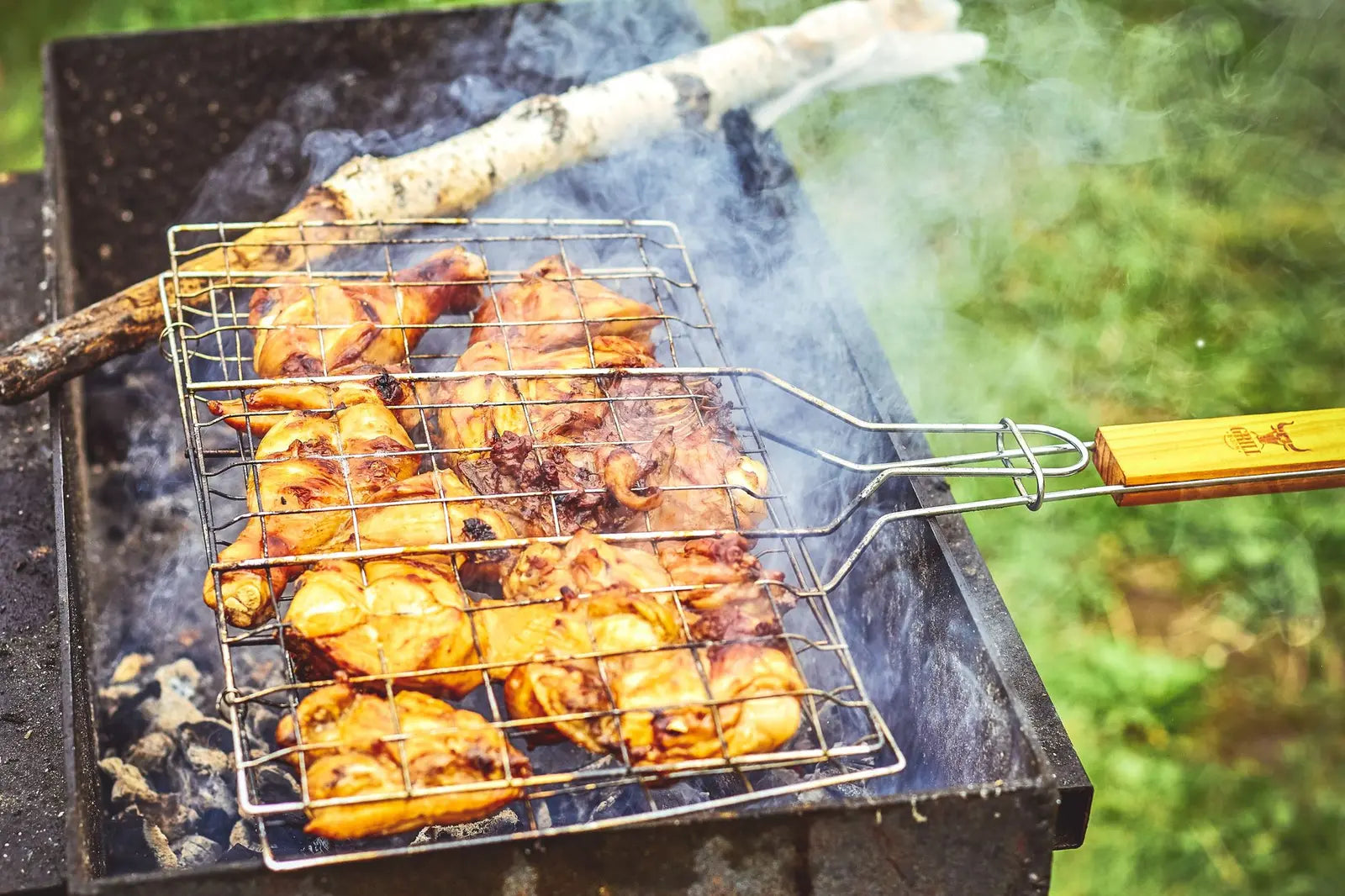

How to Season AIP Chicken Without Nightshades (Recipe)
To season AIP chicken without nightshades, skip the chili powder and paprika and build the flavor on poultry herbs (thyme, rosemary, sage), garlic, onion, turmeric, and ginger. Use it as a dry rub or stir it into a coconut-aminos marinade, about one tablespoon per pound, and cook the chicken to 165°F. A full blend and meal-prep tips are below.
To season AIP chicken without nightshades, leave out the usual chili powder and paprika and build flavor on poultry herbs, garlic, onion, and a little turmeric and ginger instead. That gives plain chicken a savory, warm, golden character without any peppers.
Below is a nightshade-free, seed-spice-free seasoning blend, how to apply it as a rub or a marinade, how to cook the chicken, and how to prep it ahead. For the wider picture, the AIP seasoning guide covers building flavor in layers.

Why AIP chicken turns out bland
Plain chicken has almost no flavor of its own, so it leans entirely on seasoning. On the autoimmune protocol, the spices that usually carry chicken come out: chili powder and paprika are nightshades, and cumin is a seed spice, so the rubs and packets most recipes use are off the table. Store marinades are the same story, since they tuck those spices plus soy and sugar under one vague label.
The fix is not more salt. It is structure. When you replace those spices with herbs, alliums, and warm aromatics, the chicken tastes complete again. The nightshade-free seasoning guide covers the swaps in full, but for chicken specifically the blend below does the work. Safe is required, sad is optional, and plain chicken does not have to be the price of compliance.

An AIP chicken seasoning blend
This makes about 6 tablespoons, enough for five to six pounds of chicken, in five minutes. It is nightshade-free and seed-spice-free.
Ingredients
- 2 tablespoons garlic powder
- 1 tablespoon onion powder
- 1 tablespoon dried thyme
- 2 teaspoons dried rosemary, crushed
- 2 teaspoons dried sage
- 1 1/2 teaspoons fine sea salt
- 1 teaspoon ground turmeric
- 1 teaspoon dried parsley
- 1/2 teaspoon ground ginger
How to mix it
- Measure every ingredient into a small bowl.
- Whisk for about 30 seconds, until the color is even.
- Transfer to a small airtight jar and label it with the date.
Thyme, rosemary, and sage are the classic poultry herbs, and turmeric adds warmth and a golden color where paprika used to. The same jar works on turkey, pork, and roasted vegetables, so it earns its shelf space; for the produce side, see how to make AIP vegetables that taste better. For other swaps, the AIP spice substitution chart is a quick reference.

How to season the chicken
Use about one tablespoon of the blend per pound of chicken. There are two easy ways to apply it.
- Dry rub: pat the chicken dry, coat it lightly with olive oil or melted coconut oil, then rub the seasoning on. Seed oils are a common avoidance on AIP, so a fruit or coconut oil is the safer base.
- Marinade: stir one tablespoon of the blend into a quarter cup of coconut aminos with a little oil, and let the chicken sit for 30 minutes to overnight.
Either way, coat the chicken evenly and let it sit at room temperature for a few minutes before cooking, so the salt starts to season the meat rather than just the surface. Then cook it however you like: roast thighs at 425°F, sear breasts in a skillet, or pressure-cook for shredding. Whatever the method, cook the chicken to an internal temperature of 165°F, the USDA safe minimum for poultry. A quart of shredded chicken seasoned this way becomes the base for several dinners.
Three flavor directions for AIP chicken
The blend is a base. From there you can steer it three ways without adding anything off-protocol.
- Savory and herby: the blend as written, finished with chopped fresh parsley and a squeeze of lemon.
- Warm and golden: add an extra half teaspoon each of turmeric and ginger, good with coconut milk for a mild curry-style direction.
- Bright and citrusy: add lemon or lime zest and fresh herbs after cooking, which keeps it light for salads and bowls.
Same blend, different finish. That is usually all plain chicken needs to stop tasting like the same dinner twice.
When a ready-made blend helps
Mixing a jar takes five minutes, but if you would rather grab one, a clear-label all-purpose blend works the same way on chicken. The everyday AIP spice blend is nightshade-free and seed-spice-free, with the herbs and warm aromatics already balanced. It is an optional helper, not a requirement. If you are deciding between buying and mixing your own, the trade-offs of AIP spice blends versus homemade are worth a read.
If your protocol skips salt, garlic, or onion, the homemade version is the better choice, since you control every ingredient. Either way, check any blend's label against your own plan before you use it.

Meal prep and storage
The seasoning jar keeps its punch for three to four months in an airtight spot away from heat and light. Whisk it before each use, since the salt and turmeric settle.
For the chicken itself, season and cook a double batch at the start of the week. Cooked chicken keeps three to four days in the fridge, and shredded chicken freezes well in meal-size portions. A simple rotation: roast a tray of thighs on Sunday, shred half for bowls and salads, and keep the rest whole for fast dinners with a vegetable and the same blend. With one jar and one cook, you have most of the week handled without seasoning from scratch each night.
Frequently asked questions
What is the best way to season AIP chicken?
Build the flavor on poultry herbs (thyme, rosemary, sage), garlic, onion, and a little turmeric and ginger, since the usual chili powder and paprika are nightshades. Use about one tablespoon of blend per pound, as a dry rub or stirred into a coconut-aminos marinade.
Can I use chicken thighs, breasts, or wings?
Yes, the blend works on any cut. Thighs and wings are forgiving and stay juicy; breasts cook fast, so watch the time. Whatever the cut, cook the chicken to 165°F internal.
What can I use instead of oil to season AIP chicken?
If you are avoiding seed oils, use olive oil, avocado oil, or melted coconut oil as the base that helps the rub stick. For a no-oil option, stir the blend into coconut aminos and use it as a marinade instead.
Is taco seasoning AIP compliant?
Most store taco seasoning is not, because it is built on chili powder and paprika (nightshades) and often cumin (a seed spice). For taco-style AIP chicken, use a nightshade-free blend and add warmth with cinnamon and ginger instead.
What are some AIP chicken meal ideas without nightshades?
Season and roast or shred a batch, then use it across the week: over greens with lemon and herbs, in a coconut-milk bowl with vegetables, or with cauliflower rice. One seasoned cook covers several nightshade-free dinners.